
Degree vs Skills: What Matters More for Your Career Success?
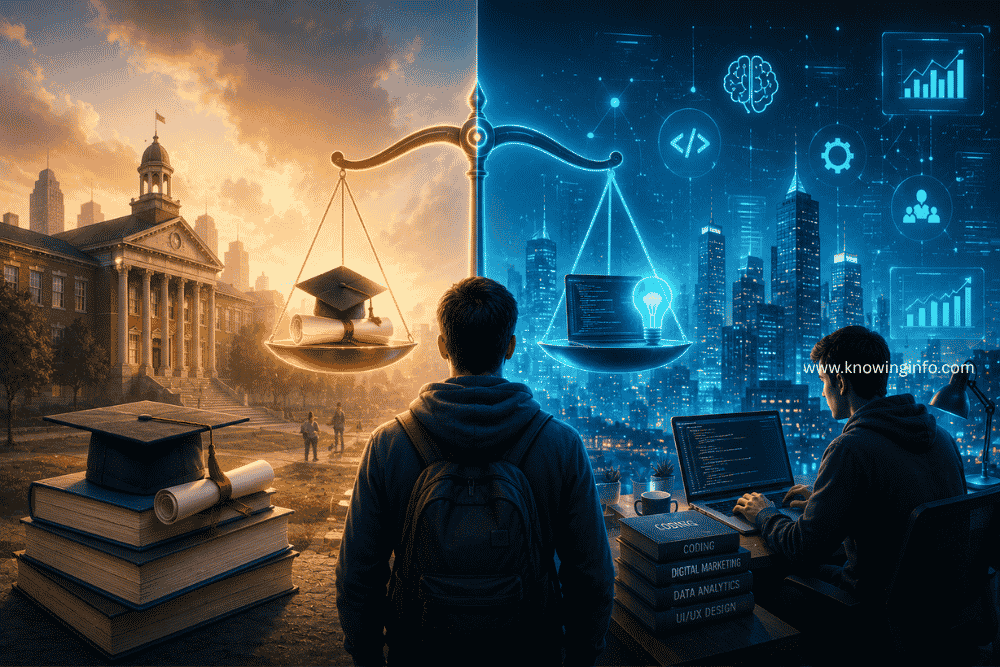
Can you imagine yourself spending four years in college, investing in your degree, and then being denied an entry-level job because of the lack of “three years of experience”? Or, conversely, can you think of yourself not having a degree, learning programming all by yourself, and then being employed in a technical position paying hundreds of thousands of dollars when you are just 21?
These are not imaginary scenarios; they are realities in the present time. In the case of deciding whether to pursue a degree or develop skills, one cannot speak of a general approach in these times. Recruitment has witnessed a tremendous shift from degrees to skills-based recruitment. This blog post gives you insight into this change in recruitment trends and how to prepare yourself for it.
The Big Shift in Hiring: Degree vs Skills.
It was quite obvious that during the previous decades, getting a degree meant getting a job right away. Previously, it meant getting the easiest possible way for the company to realize that you are disciplined and smart enough.
However, everything has changed due to the appearance of online learning, specialized skill-based courses, and fast-developing technologies. Big tech companies like Google, Apple, and IBM stated that degrees will not be required anymore in thousands of jobs. Today, the HR specialist is aware of the fact that a degree means that you can get a degree, but skills mean that you are ready for your job.
Why Degrees Still Matter: Where Credentials Rule?
Despite the popularity of skills, ignoring the concept of college education is highly irresponsible because students acquire enormous benefits from a formal education that cannot be replaced by any online course:
- Professions Needing Formal Education: Medical professionals, lawyers, engineers, accountants, and many other specialists cannot receive proper education without going to college, which means that there will be no way to operate as a physician after taking an online course.
- Contacts: It is not a secret that one of the greatest benefits of attending college is meeting people, and these people might become useful contacts and help to get the job faster and easier during career fairs.
- Soft Skills: Attending college forces students to develop critical thinking, writing, teamwork, and management skills, which help them in their future.
Why Practical Knowledge Simply Beats Theory.
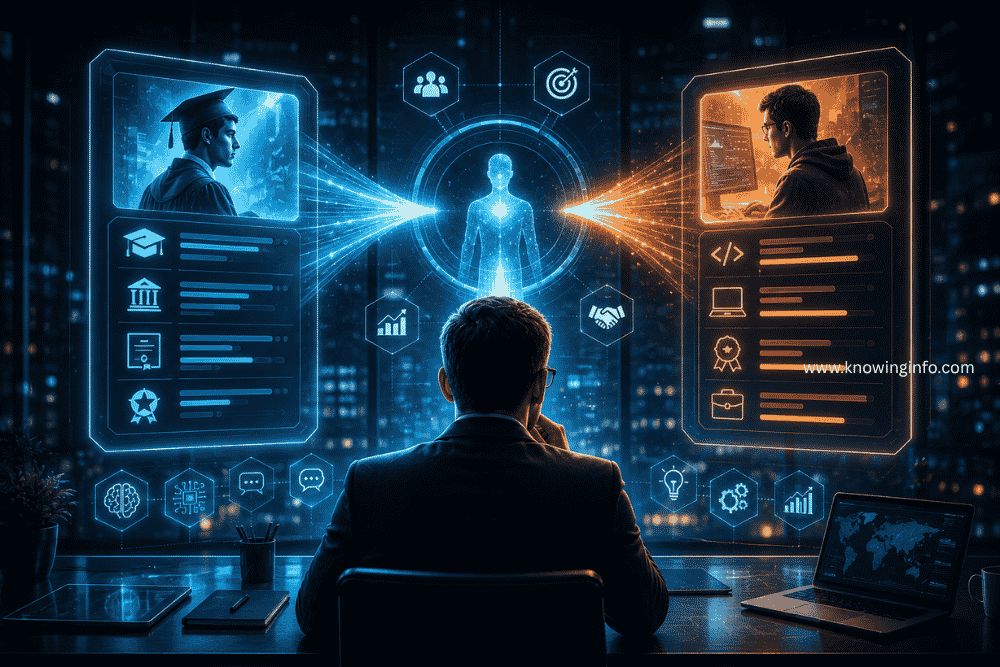
The answer is that whenever a company faces an acute issue, hands-on abilities provide immediate solutions. There is simply no way to compete with this speed through theory.
Consider some rapidly changing fields, such as digital marketing or software development. The pace of technological change far outstrips any update in university textbooks. This is how a person without formal education but with current knowledge of AI technologies and projects implemented online will outperform a graduate from several years ago.
The T-Shaped Professional: Getting the Best of Both Worlds.
It would be much more reasonable for your future career to be based on having both education and skills. What any employer would desire to have is T-shaped professionals.
The upper part of the letter “T” symbolizes one’s ability to think strategically and communicate effectively, as well as broad knowledge that is gained because of having the education. The lower part of the letter represents one’s specialized skills, which consist of knowing how to use the particular technology or do something specific, such as coding, data analysis, and marketing campaign organization.
Frequently Asked Questions.
- Is going to college still worth it for career advancement?
Yes, but there’s one condition that applies, depending on the chosen field. There are some professions, such as medicine, law, engineering, etc., that require a college degree, but for technology, design, and digital media, skills speak louder than diplomas.
- What is skills-based hiring?
Skills-based hiring is an approach to hiring that focuses on your abilities and practical experience, rather than whether you have a college degree or not.
- Can I have a high-paying career without a degree?
Absolutely! The demand for specialists in programming, cybersecurity, cloud technologies, digital marketing, and sales is increasing day by day, and that guarantees a better and high-paying future for those who master these skills.
- What soft skills are the most valuable for career development?
Being able to think critically, adapt quickly, communicate effectively, and solve problems is necessary for you to be an invaluable resource in any professional setting.
- How do I present my skills without having a degree?
Create a public portfolio, provide examples of actual work, obtain certifications, and demonstrate your value in quantifiable terms through your resume and LinkedIn profile.
Key Takeaways
- Changes in Recruitment: Businesses are seeking skill-based recruitment to ensure that employees start working from day one.
- Degrees Matter: Certificates are a necessity for profession-based occupations and provide amazing chances to network and communicate.
- Keep Studying: As skills become outdated very quickly, it is important to constantly upgrade your expertise regardless of your education background.
- Ultimate Mix: Combining a wide general knowledge with 1-2 highly developed technical skills will make you unbeatable.
Conclusion
In the discussion about choosing between a degree and skills, it is obvious that while a degree may open many doors, it is your skills that would keep you there. While the degree can help make your resume more impressive at first glance, you need to have practical skills, or else your career development would not move forward at all.
However, even if one has superb technical skills, he or she cannot be a successful leader without business acumen and good communication skills. In conclusion, success depends on the fact that one should show his or her capabilities now, develop new skills tomorrow, and perceive growth as an ongoing process.