
How to Improve Athletic Performance: The Science Behind What Makes a Champion at the Biological Level
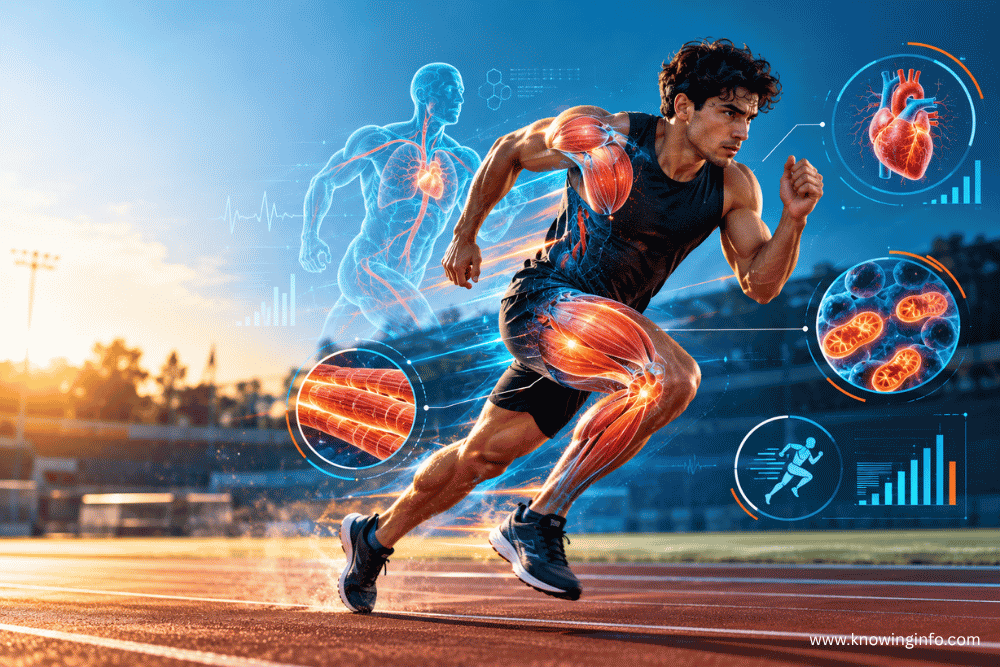
As you step inside an Olympic training facility, you will not see any superheroes with superpowers but real heroes sweating on rubber mats, beepers monitoring their heartbeats, and athletes taking deep breaths in the cool air. When we see a winner cross the finish line, we celebrate their efforts. However, beyond their victory, there is an amazing biological system at work.
Finding out how to improve athletic performance does not mean killing yourself every day by doing intensive physical exercises. It means learning what goes on in your body, how small energy generators multiply inside your cells, how arteries supply you with new energy, and how your brain commands muscles to work at high speed. In this blog, we will explain the science behind what makes a champion at the biological level.
The Engine Room: Tiny Power Plants Inside Your Cells
With every movement, running, walking, or lifting a weight, your body consumes an energy fuel named ATP. Consider it like the gasoline inside the fuel tank of a car. The quicker your body refills the tank, the more powerful and long-lasting your actions will be.
If you want to enhance your athletic performance, you have to start by considering the function of your mitochondria, which are the mini-powerhouses found within your muscles.
If you do lots of cardio (or Zone 2 cardio), your body turns on a biological control that results in the creation of new and very efficient mitochondria. The greater number of mitochondria your muscles have, the more efficiently they use fats as energy sources, and you won’t be exhausted halfway through the game.
Opening the Highway: Oxygen and Blood Flow
Oxygen serves as the ultimate fuel that provides the necessary stamina to the human body. Your VO2 max level is nothing but an indicator that helps decide how efficiently your body can absorb and utilize oxygen during intense physical activities. Increasing your VO2 max requires:
- A Larger Pump: Intelligent cardio exercises allow your heart to pump more blood with every single beat.
- More Delivery Routes: Exercise leads to the formation of small blood capillaries that coil up around the muscle fibers.
- Faster Transfers: The development of additional proteins that snatch oxygen from your blood to deliver it to your cells occurs in your muscles.
By having more delivery routes and an efficient pump, your working muscles are provided with enough energy constantly without being gassy and fatigued.
The Nervous System: The Brain-to-Muscle Connection
Your muscles do not work independently instead, they are controlled by your brain and nerves. An enormous amount of strength and speed is basically controlled by your brain.
Whenever you train for explosive jumps or heavy lifting, your brain gets used to recruiting your muscle fibers simultaneously. Through training, your nervous system learns to deactivate its inherent safety feature.
By coordinating your brain and muscles precisely, you generate much more strength without having to develop large and bulky muscles.
How to Improve Athletic Performance with Deep Recovery
The fact is, exercise does not build strength during the process; instead, exercise breaks down your muscle tissues. It is during the period of relaxation that the magic really happens.
While you are sleeping deeply in the state of slow waves, the brain produces growth hormones that provide your muscles with nutrients, allowing the torn muscles to recover and grow bigger.
However, if you have insomnia or you always feel stressed, then the level of your cortisol hormone remains high, causing your muscles and your immune system to suffer. This is why top-class athletes value their eight-hour sleep as much as hard training sessions.
Key Takeaways
- Make Your Cells Powerful: Slow and steady cardio increases mitochondria so that you have endurance.
- Get More Energy: By increasing your ability to pump and deliver oxygen, you will get better oxygen delivery.
- Brain Training: Power is not just about being able to activate your muscle fibers in seconds.
- Rest to Grow: This is when the muscle repairs and adapts during your deep sleep.
Conclusion
Ultimately, learning how to improve athletic performance requires you to focus on mastering the principles of human biology rather than trying to catch up with the latest exercise trends.
Your body has an adaptive mechanism; all you need to do is train it appropriately, fuel it with appropriate nutrition, and allow for adequate recovery. Listen to your biology and follow the basic principles, and the science will make you a champion!
Frequently Asked Questions
1. What Is The Single Most Important Factor For Improving Athletic Performance?
Be consistent with the basics. No matter how fashionable your gear or workout routine is, it won’t be much good without progressive training, proper nutrition, and sleep.
2. How Does Easy, Slow Cardio Make You A Faster Athlete?
Cardio exercises performed slowly help to create your aerobic engine through increased amounts of mitochondria and smaller blood vessels in the cells. Such a bigger “fuel tank” ensures that you have enough oxygen not to exhaust yourself during explosive effort.
3. Why Do Athletes Prioritize Sleep Just As Much As Training?
Exercising causes wear and tear on the muscles, while sleeping builds up the muscles again. Growth hormones are released by the body when in deep sleep in order to regenerate broken-down muscles.
4. Can You Overcome “Bad” Genetics With Smart Training?
Absolutely. There is no doubt genetics determine limb size and the initial muscle fiber ratio, but training, nutrition, and recovery define if you ever come anywhere near your biological limit.
5. How Do You Know If Your Central Nervous System Is Overtrained?
If you experience fatigue in your grip, have slower reaction times, lower motivation levels, or an elevated heart rate when you are not exerting yourself, then your nervous system requires more rest.