
What Causes Chronic Inflammation and Why It Increases the Risk of Many Serious Diseases
You hit your toe. The toe becomes inflamed and stays that way for a few days before healing itself. This is called acute inflammation, the short-term repair process of your body.
What happens when the body’s short-term repair process does not ever stop working? That is chronic inflammation, the cause of some of our most dangerous diseases.
Chronic inflammation is not a disease; it is merely an ongoing reaction. Chronic inflammation is a prolonged state of immune response that leaves your body always ready. And the consequences of this readiness will exhaust you.
In this blog, we will break down what causes chronic inflammation, why it’s so damaging, and what you can actually do about it.
What Actually Triggers Chronic Inflammation?
Chronic inflammation does not just occur randomly. It is typically triggered by an event that cannot be completely resolved. Researchers have pointed out certain basic factors that maintain the immune response in an active state.
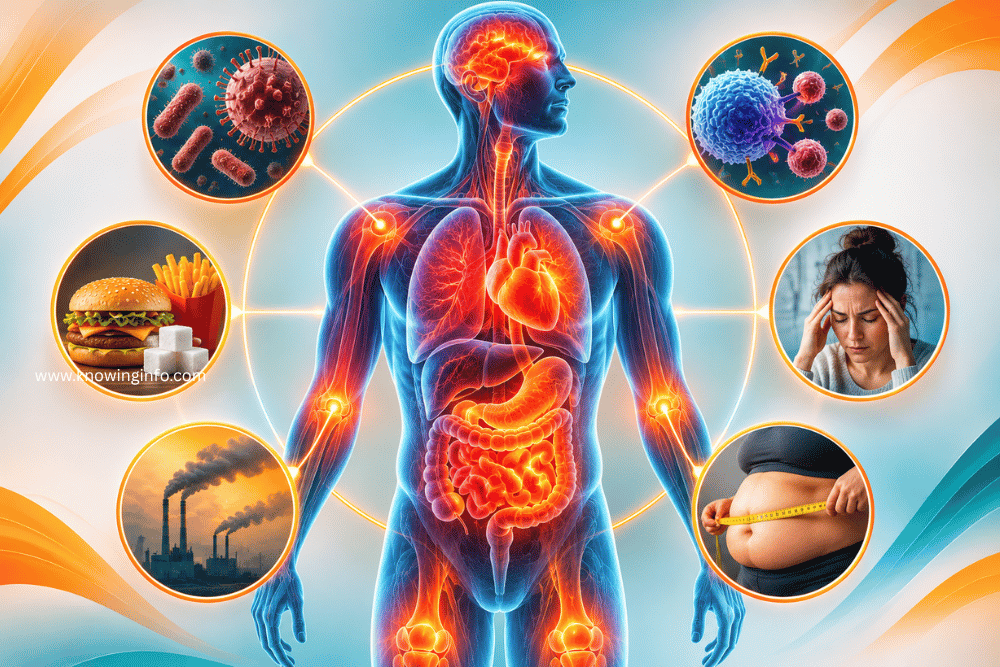
An important cause is a constant infection. If you cannot get rid of a virus, bacteria, or a parasite, your immune system will continue fighting for longer than necessary. A second reason is autoimmunity, when your immune system confuses your own tissue with invaders and attacks it constantly. A good example is rheumatoid arthritis.
And then there’s your day-to-day life. Exposure to environmental pollutants, poor eating habits, and even psychological stress can all maintain an ongoing inflammatory response. Your body isn’t built for dealing with continuous threats. But when it does, it takes its toll.
How Does Your Lifestyle Keep the Fire Burning?
And that’s when it becomes personal. It is your choice whether you want to add to the inflammation or reduce it. Inflammatory diets include those rich in refined carbs, trans fats, and sugar.
However, poor consumption of fruit, vegetables, and omega-3 fatty acids means that your body does not have the resources to reduce inflammation on its own. Research indicates that adequate nutrition can in fact delay the development of inflammatory conditions such as type 2 diabetes and inflammatory bowel disease.
A lack of physical activity can also serve as a “quiet” culprit. Lack of movement causes adipose tissue, particularly visceral fat surrounding your organs, to release pro-inflammatory substances known as adipokines that keep inflammation high even if there is nothing to fight off.
The most underestimated cause of chronic inflammation is chronic psychological stress. It stimulates inflammation-related processes in the body in exactly the same way as the physical threat does.
Why Does Chronic Inflammation Increase Disease Risk?
Here’s the scary part: chronic inflammation doesn’t just make you feel tired or achy. It fundamentally changes how your body works.
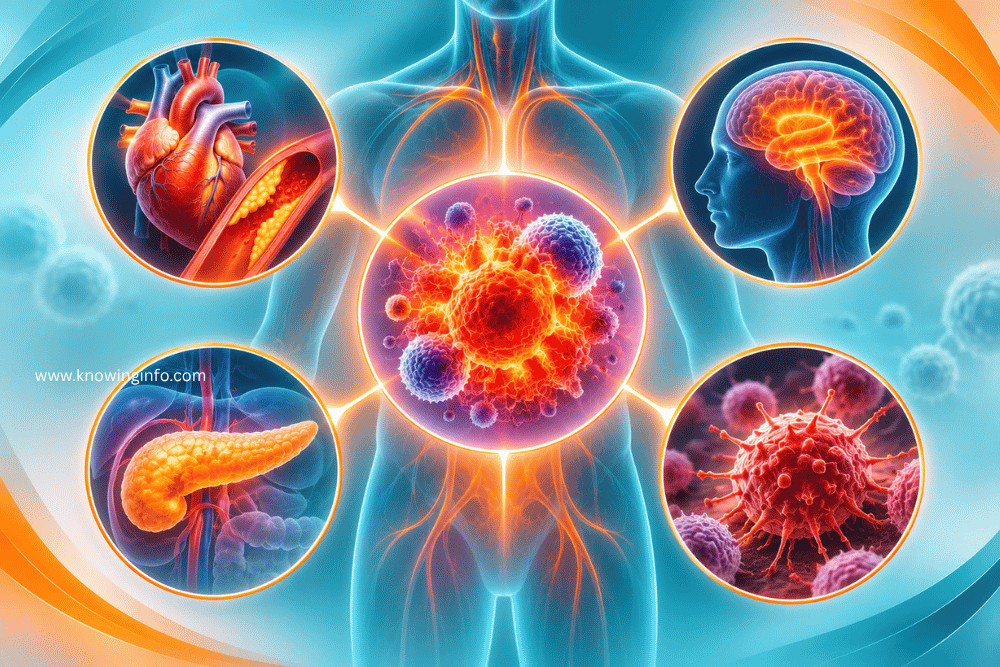
Cardiovascular disease is one of the most compelling associations. Atherosclerosis, or the thickening of arteries, is a result of the body’s immune system’s prolonged response to damage to the arteries. Immune cells travel to the arteries and secrete inflammation-causing substances that help create the plaques that cause heart attacks and strokes.
Another condition that has been shown to be associated with inflammation is diabetes. Type 2 diabetes results from chronic inflammation causing the body to become resistant to insulin. In type 1 diabetes, the body’s immune system attacks the pancreas cells that create insulin.
There is a relationship between cancer and inflammation as well. Inflammation causes an environment where tumor development thrives. It damages DNA, leads to abnormal cell division, and aids cancer cells in escaping the immune system.
Alzheimer’s disease and other neurodegenerative disorders are also related to inflammation. In older individuals, inflammation is related to poor mental functioning and dementia.
Can You Actually Reverse Chronic Inflammation?
The honest answer: it’s complicated. But the research is clear on one thing: lifestyle changes make a real difference.
Anti-inflammatory foods are your primary defense mechanism. Think about fatty fish such as salmon, leafy greens, berries, and nuts. All of these foods contain antioxidants and omega-3s that help your body control its inflammatory response. Alongside this, reducing the intake of processed foods, sugars, and trans fats deprives inflammation of its fuel.
Physical activity is far more important than you realize. Exercise not only helps you burn calories; it also helps regulate your immune system and reduce the inflammatory responses of fat tissue.
Stress management is not an option; whether you do it through meditation, deep breathing, or just safeguarding your sleep, stress hormone reduction allows your immune system to reboot.
Then there’s the matter of gut health. Your microbiome- the millions of bacteria living in your digestive system- plays a major part in controlling inflammation. The best thing to do is to avoid unnecessary antibiotics and NSAIDs and eat foods high in fiber.
Key Takeaways
- Chronic inflammation is a condition in which your immune system remains active for months or even years.
- Belly fat produces inflammatory chemicals that fuel the flame.
- It silently causes heart disease, diabetes, and cancer.
- Diet and gut microbiome determine the level of inflammation.
- It can be measured using blood markers and reversed by making lifestyle modifications.
The Bottom Line on Chronic Inflammation
Chronic inflammation cannot be felt as it develops. It is insidious and accumulative. However, it does not necessarily have to develop.
Understanding what causes chronic inflammation can change your life. It enables one to examine his or her daily habits, what is consumed, how physically active one is, and how he or she manages stress. In other words, one gets the ability to choose those things that will help suppress rather than trigger the immune response.
Chronic inflammation-related illnesses are scary. But the way out lies not in being scared, but in listening to what your body tries to say and providing it with what it requires.
FAQs
1. What Is The Difference Between Acute Inflammation And Chronic Inflammation?
Acute inflammation is temporary and protective, such as inflammation following a cut. Acute inflammation only lasts for hours to days. Chronic inflammation lasts for months to years; it does not have any protective value and causes tissue damage.
2. Can Chronic Inflammation Exist Without Any Visible Symptoms?
Yes. Many people exhibit high CRP or IL-6 levels even when not sick. Such inflammation is known as “silent inflammation.” It causes no noticeable pain or swelling but destroys blood vessels, joints, and organs over years.
3. Which Specific Foods Are Most Strongly Linked To Chronic Inflammation?
Trans fats (found in some fried and processed foods), refined carbs (white bread, sweetened beverages), and overconsumption of omega-6 fatty acids from industrially produced seed oils are the major dietary factors in the diet. Red meat and processed meat also play a role.
4. How Long Does It Take To Reduce Chronic Inflammation Through Lifestyle Changes?
Studies have indicated that there are some positive changes in levels of inflammation-related markers such as CRP after 4 to 12 weeks of making changes in your diet and lifestyle. But reversing the effects of years of damage will take 6 months to a year.
5. Can Chronic Inflammation Be Cured Completely?
It all depends on the reason for the disease. If it is because of lifestyle-related issues, then there will be marked improvement. However, if it is due to an autoimmune disorder, then it can be controlled but cannot be cured.