
The Evolution of Watches: How Timekeeping Changed the World
Ever wondered why time is such a bizarre thing? You can’t touch it, smell it, or grasp a portion of it. However, somehow, we managed to confine this intangible concept into a small metal case that fits perfectly around our wrist.
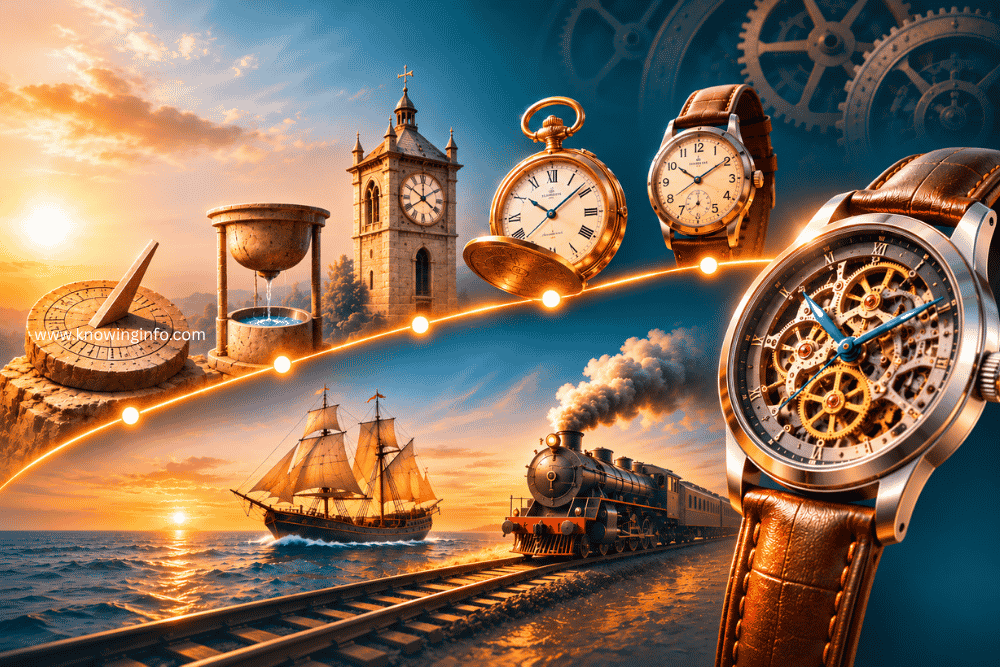
In the absence of smartphones and digital watches, people’s lives were completely subject to the natural environment. The existence of the sun determined when someone would go to sleep or wake up for work. The development process that transformed shadow casting into the creation of a sophisticated device capable of measuring time is one of the most interesting stories in human history.
The study of watches, the evolution and importance of timekeeping, is not only about learning the mechanisms of timekeeping instruments. It is about the influence of a single concept that allowed safe navigation across the ocean, prevented train collisions, and helped to save many lives during wars. Let’s sit down and follow the story step-by-step.
When We Borrowed Time from Nature: Sundials and Water Clocks?
Initially, man did not have time on his own but had to use whatever was provided by nature. The ancient Egyptians came up with an ingenious idea around 3500 BCE: that the path of the sun across the sky would create a curved line from which a vertical pole would cast shadows.
The Egyptians invented the sundial, in which they marked the spot where the shadow would fall on the ground and split the day into 12 sections. Did you know that this is where the concept of a 24-hour day began?
While this invention was quite ingenious, it still had its limitations, and here is why: Days in summer are relatively longer than in winter; thus, “an hour” could only be known at certain periods.
Finally, people would be able to measure time indoors and even at night! However, the temperature of the water affects its flow, while the air makes candles burn faster. Nature was still being tricky!
The Big Breakthrough: Trapping Energy in a Tiny Spring
Ultimately, clever clockmakers found out a huge secret: you cannot trap time, but you can measure a regular rhythmic beat.
During the 1500s, there were huge, bulky clocks that occupied an elevated position on top of church towers. The use of these clocks was dependent upon heavy weights that powered their mechanism. This implied that one had to come out of one’s house to read the time.
But then came the wonderful invention of a German clock maker named Peter Henlein. He invented the mainspring. Picture in your mind a long strip of steel wound tightly within a little case. Then when it gets wound up, it becomes full of energy, which gradually unwinds from within.
And just like that, the great invention made it possible for giant tower clocks to become pocket watches. They were egg-shaped watches, hence nicknamed “Nuremberg Eggs”.
After that came two other inventions: the balance spring and the escapement. The escapement is the mechanism through which the stored energy is released in small but equal bursts. So, when you listen to the tick-tick-tick of your watch held near your ear, it is actually the energy getting released with each tick!
How Watches Saved Lives and Built Nations ?
From the moment watches became portable devices, they stopped being mere luxuries and became absolute necessities for the world.
1. Saving Ships from Wrecking on the Ocean
In the 18th century, sailing on the open ocean was an incredibly risky undertaking. There was no problem with finding out latitude by observing stars in the sky. However, finding out how far a vessel is from the eastern or western shores (the longitude) was almost impossible since for it one should know two things: what time it is in the place where the ship is located, and what time it is in the port where the ship is anchored.
If the difference between the clocks of a ship and its port is only four minutes, the sailors could miscalculate their location by over a hundred miles and wreck the ship on some sharp reefs.
In 1714, the English government announced an enormous prize to the man who would be able to solve this issue. This man happened to be a humble carpenter called John Harrison who created a marine chronometer, an amazingly accurate portable clock.
2. Stopping Train Collisions
Fast forward to the nineteenth century. Railroads were zooming from country to country at incredible speeds, yet each village continued to follow its own time according to when the noon sun rose.
Since railway conductors were adhering to different time schedules along the identical track lines, fatal head-on accidents were constantly occurring, forcing governments to introduce time zones and make all railroad workers keep extremely reliable watches.
The Birth of the Wristwatch: From Female Fashion to Battlefield Tool
There is a rather amusing fact about history: for a really long time, any respectable man didn’t wear watches on his wrist. Pocket watches were in fashion. Watches on the wrist were considered some kind of delicate jewelry worn by rich women only.
The change came into effect in 1904. One famous Brazilian pilot, Alberto Santos-Dumont, visited his friend, watchmaker Louis Cartier. He expressed discontent with the inconvenient and extremely dangerous process of pulling out a pocket watch from the jacket when he flew his open-air airplane. Thus, the first wristwatch, Cartier Santos, was born.
But World War I (1914-1918) arrived, and everything went topsy-turvy from then on. On the battlefields of the First World War, where soldiers lived in conditions of trench warfare, the timing of artillery fire became a matter of seconds.
Looking for your watch in your pocket while being fired upon made you a perfect target. That is why soldiers began to fix small wire loops on pocket watches and wore them tightly fastened on their wrists using leather straps. Such watches got the name of “trench watches.” After the war, when soldiers returned wearing their new timekeepers, the public attitude towards them turned upside down.
Why Do People Still Spend Fortunes on Mechanical Watches Today?
Just stop and think for a moment: Your smartphone or an inexpensive $10 digital watch keeps better and more accurate time than a $50,000 luxury mechanical watch. Why then are people fascinated with them?
Because luxury mechanical watches don’t tell time anymore; instead, they are about craftsmanship, tradition, and emotions:
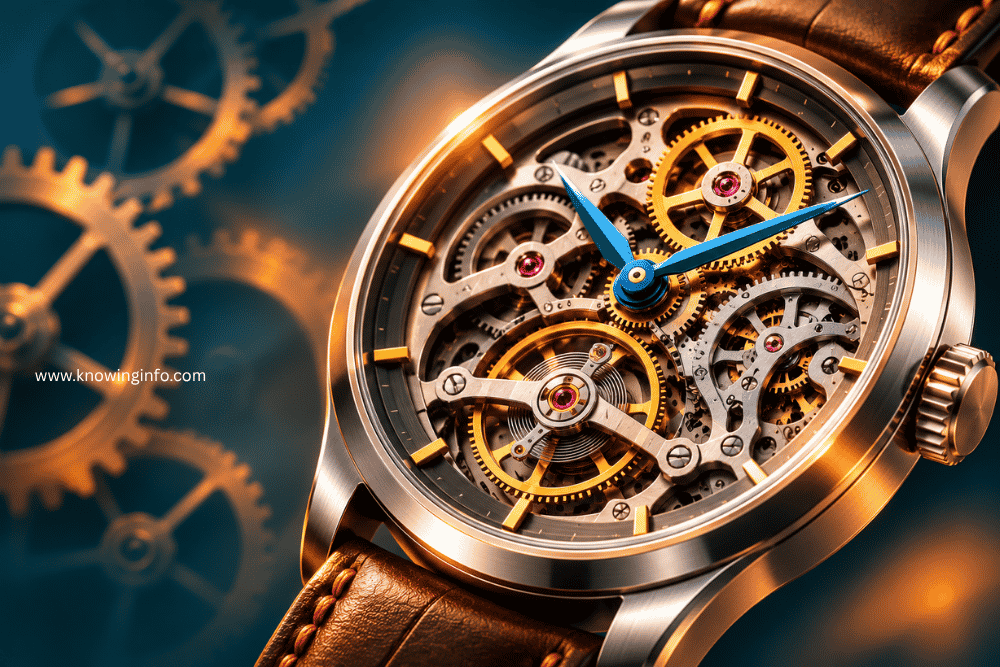
- Unbelievable Mechanics: A luxury mechanical watch has hundreds of tiny gears, screws, and springs, all put together by a master watchmaker under a magnifying glass.
- True Artisan Work: No batteries and computer chips here, just mechanics, the human mind, and talent.
- Silent Greeting: For many people, wearing such a rare watch is like a silent handshake, meaning “I admire history, craftsmanship, and amazing engineering.”
Frequently Asked Questions
1. What is the history of watches in basic language?
It is how humankind transitioned from observing shadows cast by the sun to having portable mechanical watches, wristwatches used on battlefields, and collectable luxury watches.
2. Who invented the very first portable watch?
Peter Henlein, the German clockmaker, invented the mainspring, which enabled huge tower clocks to be converted into pocket watches.
3. Why did men move from pocket watches to wristwatches?
The change happened because of World War I, when soldiers needed an instant and convenient way of measuring time without their hands.
4. Why were clocks helpful in ocean navigation?
Thanks to marine chronometers, sailors could measure their longitude at sea and not risk getting lost and sinking in the ocean.
5. Why do people purchase mechanical watches even if there are smartphones?
People buy watches because of their prestige and history; hand-crafted mechanical pieces are timeless pieces of human art rather than tools.
Key Takeaways
- Counting Beats: Accurate timekeeping began when we decided to forget about the clouds and created man-made mechanical rhythmic cycles.
- Engine for Progress: Wristwatches were not only an accessory but also an important tool that made safe navigation possible for ships, ensured that trains did not collide, and helped organize factories.
- Proven in Combat: WWI forever altered the perception of wristwatches, making them go from feminine jewelry to masculine accessories.
- Living Legacy: Mechanical watches of today have survived because they embody decades of people’s work, craft, and amazing engineering.
Conclusion
As history shows us, the entire chronology of watches is an example of man overcoming nature and limiting its power over our lives through the ingenious way of harnessing energy within minute steel springs and directing it using gears, thus creating our organized world free of the unpredictability of weather conditions.
In the contemporary day and age, your phone will give you the information, but a mechanical watch will let you feel the legacy of hundreds of years of man’s achievements. Next time you glance at your watch, stop for a moment and think about what lies right there under your fingers.
How wonderful that hundreds of tiny parts can work in perfect order, without any batteries at all! If you liked going through this history, please share it with your friends who are passionate about history or technology!