
Why Sleep Is More Important? How Sleep Affects Your Health, Mood, and Productivity.
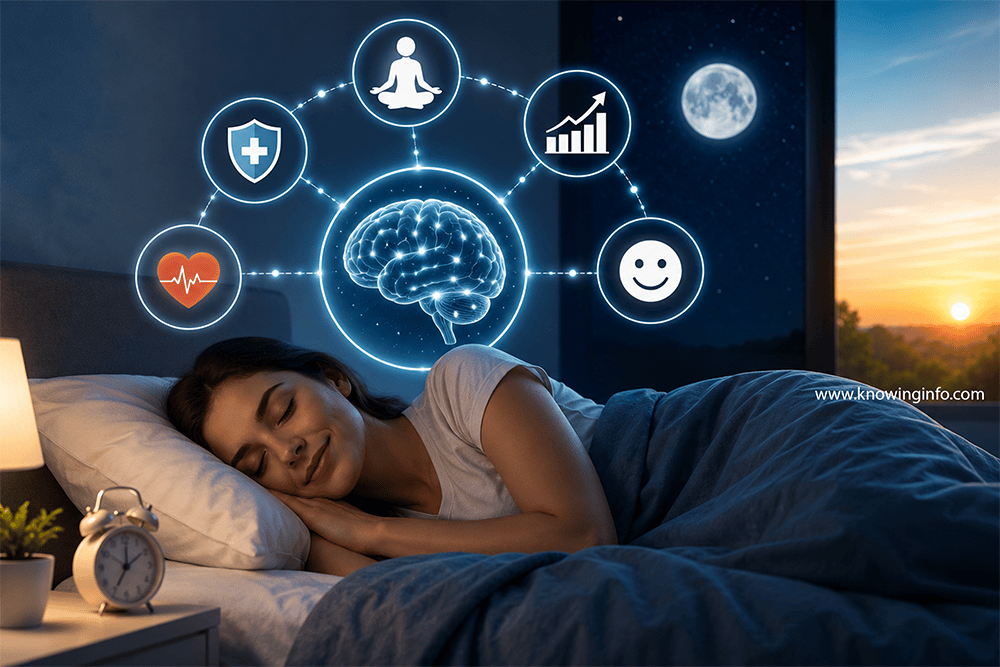
Just look at your routine for the day. Do you follow the number of steps you have taken or the number of calories you burn during the day? Most likely, you do exercise in the gym or monitor your diet in some other way, but whenever your life becomes hectic, one thing which sacrificed is your sleep.
But according to science, denying yourself enough hours of sleep can break down your physical and mental well-being. Understanding the importance of sleep, rather than just healthy eating and regular exercise, is the true key to achieving wellness. Let’s look at exactly how sleep fixes your health, brightens your mood, and boosts your productivity every single day.
What Is Sleep and Why Do You Need It?
Sleep is not simply a time during which your whole body switches off and closes down. Rather, it is an extremely active condition in which your brain and body engage in necessary repairs. Imagine your body as a busy highway system, and when you go to sleep, the traffic stops so repair crews can patch up potholes, clear away the trash, and fix the roads for the next day.
The 3 Major Stages of Sleep
Each night, the brain goes through a series of sleep cycles that last about 90 minutes each. These cycles are made up of three primary phases:
- Light Sleep: The light sleep stage is the introduction phase, where your heart slows down, and your muscles relax just to prepare you for the other steps.
- Deep Sleep: This is the physiological phase of the body. In this stage, blood pressure lowers, your tissues repair themselves, and your body releases growth hormones to heal your muscles.
- REM Sleep: REM stands for Rapid Eye Movement. This phase is associated with your mental recovery functions, such as dreams, memory consolidation, and emotional processing.
Skipping this sleep process deprives your brain of the much-needed healing process, making you fatigued.
How Sleep Affects Your Health?
The strength of your immune system and heart depends on the amount of time you spend sleeping.
- Boosts Immune System
When you are sleeping, the body produces certain proteins that protect itself from diseases, infections, and inflammations. When you don’t get enough sleep, it loses the ability to protect yourself against infections like cold and flu.
- Promotes a Healthy Heart
As one sleeps deeply, there is a natural fall in their blood pressure, which gives rest to the heart and blood vessels. Not sleeping enough causes the blood pressure to remain consistently high, which increases the chances of heart disease and strokes.
- Promotes Healthy Weight Management
Sleep controls the hormones which responsible for hunger: leptin (makes you feel full) and ghrelin (makes you feel hungry). Leptin falls while ghrelin spikes who lack sleep, making them desire to consume more calorie-rich foods.
How Sleep Affects Your Mood and Mental Health?
When you sleep, your brain flushes out toxins and balances your emotions, but when you do not get sufficient sleep, your mental well-being suffer tremendously.
- Emotional Control and Stress
When your brain is too tired, it cannot manage your daily priorities. Without sufficient sleep, your brain gets into an emotionally overactive mode, which makes you sensitive to small disturbances in your environment.
- The Connection to Depression
Insomnia and depression are involved in a deadly cycle. Insomnia causes a negative outlook on things, and high stress levels make falling asleep more difficult. Valuing regular sleep controls the stress hormones in your body and helps develop emotional strength for facing life’s challenges.
How Sleep Impacts Productivity and Performance?
While many people remain awake to complete their tasks and consider themselves productive, the truth is that lack of sleep inhibits their brain’s efficiency.
Concentration, Learning, and Creativity
A good night’s sleep improves your ability to focus, process information faster, and control errors. During the REM stage of sleep, the brain merges information in a very interesting manner, which is why your best ideas often come to you early in the morning.
What Happens When You Don’t Sleep Enough?
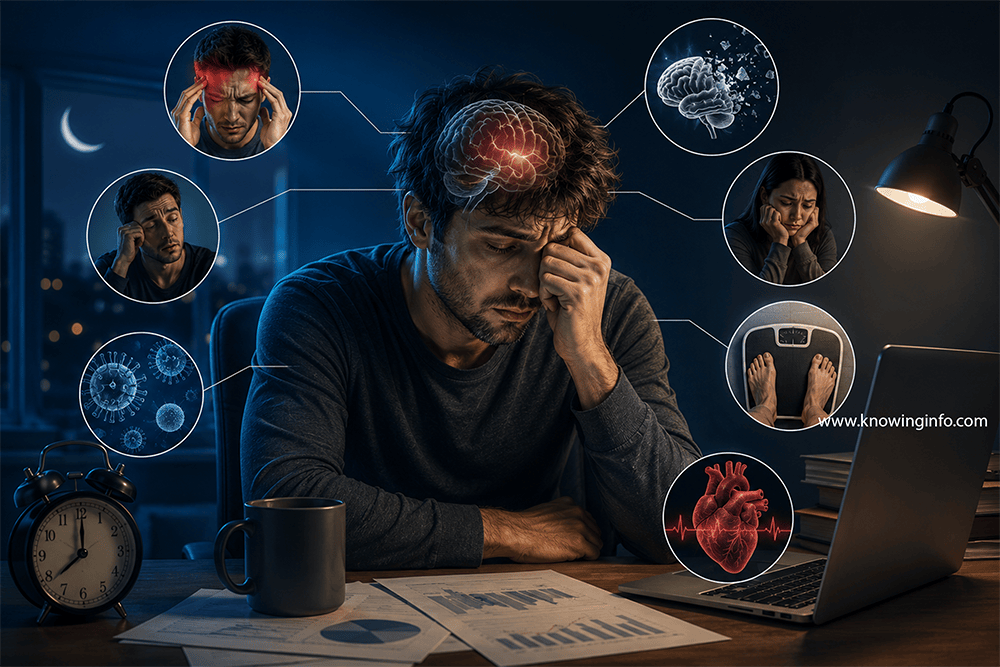
A single poor night’s sleep immediately displays its negative effects on the body; however, the long-term compounding damage is extremely harmful.
Short Term vs. Long Term Effects
Short-Term Effects:
- Feeling tired during the day
- Suffering from mood disorders
- Dark circles under the eyes
- Lack of concentration
Long-Term Effects:
- Damaging body organs
- Obesity
- Anxiety
- Memory problems
- Heart-related health conditions
Warning Signs That You Are Exhausted
- Feeling absolutely exhausted, no matter how many cups of coffee you consume.
- Being forgetful about basic things, like your keys, names, or your job at work.
- Having common illnesses such as colds and other minor illnesses regularly.
- Facing sharp drops in both motivation and mood.
How Much Sleep Do You Really Need?
Sleep needs will change throughout your life stages.
Is More Always Better?
Not necessarily. In fact, getting more than 11 hours of sleep regularly as an adult can lead to feeling sleepy and dull, and even indicate an underlying condition such as depression.
Practical Tips to Improve Your Sleep
Adjusting your sleeping habits will not require any type of fancy gadgets. Simple lifestyle changes are enough to change things for you:
- Stick to Timings: Have a fixed bedtime and waking time every single day, including weekends, to regulate your body clock.
- No Screen Time: Turn off all screens, such as phones, television, and tablets, at least one hour prior to sleep time, as blue light interferes with the brain and does not allow it to relax.
- Limit Caffeine Intake: Avoid any coffee or caffeinated drinks from 2 PM onwards, since it remains active in the body up to 8 hours.
- Chill Out Your Bedroom: Make sure that your sleeping room is always dark, quiet, and on the cool side, so that your body will be able to enter into its natural deep sleep mode.
- Set a Calming Routine: Read a book, take a bath, or perform some gentle stretches before going to bed to calm your nervous system.
FAQs
- Why do we need sleep for good health?
Because it allows our body to repair itself, builds muscles, removes toxins from our brains, and boosts our immune system against diseases.
- What effects will sleep lack have on your mood?
It will affect communication between the logical and emotional parts of your brain, resulting in mood changes, excessive anxiety, and a lack of patience.
- Does sleeplessness affect our productivity?
Sleep deprivation affects us negatively because it makes our brains lazy and stops us from concentrating on what we are doing, thus making it difficult for us to accomplish our tasks.
- What amount of sleep should adults get?
Generally, require anywhere from 7 to 9 hours of continuous sleep per night.
- How do you know if your sleep quality is poor?
Indicators are fatigue after a good night’s rest, excessive sleeping, snoring, or daytime sleepiness.
Points to Remember
- Rejuvenation: By sleeping, you give your body time to heal itself and detoxify the brain.
- Emotional Balance: A good night’s sleep is known to balance emotions and alleviate everyday stress and anxiety.
- Thinking Power: Proper functioning of the brain relies on deep and REM sleep.
- Future Health: Consistent sleep prevents long-term issues like obesity, heart disease, and memory loss.
Conclusion
Good sleep is an absolute biological requirement, not a luxury that one can do without. One may have a perfect diet and perfect workouts, but the body is bound to fail without good sleep. Fitness is achieved through a balance of diet, exercise, and sleep, but removing the sleep factor from the equation, the whole thing fails for you.
Remember, start treating sleep with the seriousness it requires. It begins with switching off all devices and having a good night’s rest tonight because doing so creates a solid platform for an efficient tomorrow. Better sleep today leads to better health, happiness, and productivity tomorrow.