Beyond the Game: Why Sports Matter and Their Profound Role in Human Society ?
During the winters of 1914, within the cold and trench-ridden environment of World War I, an unprecedented act took place on the Western Front. The German and the British soldiers, who were fighting ferociously in the war, left aside their guns, came out from their icy holes, and met in the middle of No Man’s Land to enjoy Christmas.
They had no common language, and they were just a few hours ago attempting to kill one another. But some man kicked a crude football into the icy land, and for a brief while, the deadly enemies became teammates and competitors in the game. Thus, peace between warring nations was brokered not through politics but by a mere leather football.
Any insight into the significance of sports in life and the importance of sports can be achieved only if one grasps this significant point: sports influence some basic element in us, which is human. And that remains even long after the last whistle goes off and the light of the stadium fades away.
More Than Entertainment: Sports Speak Every Language.
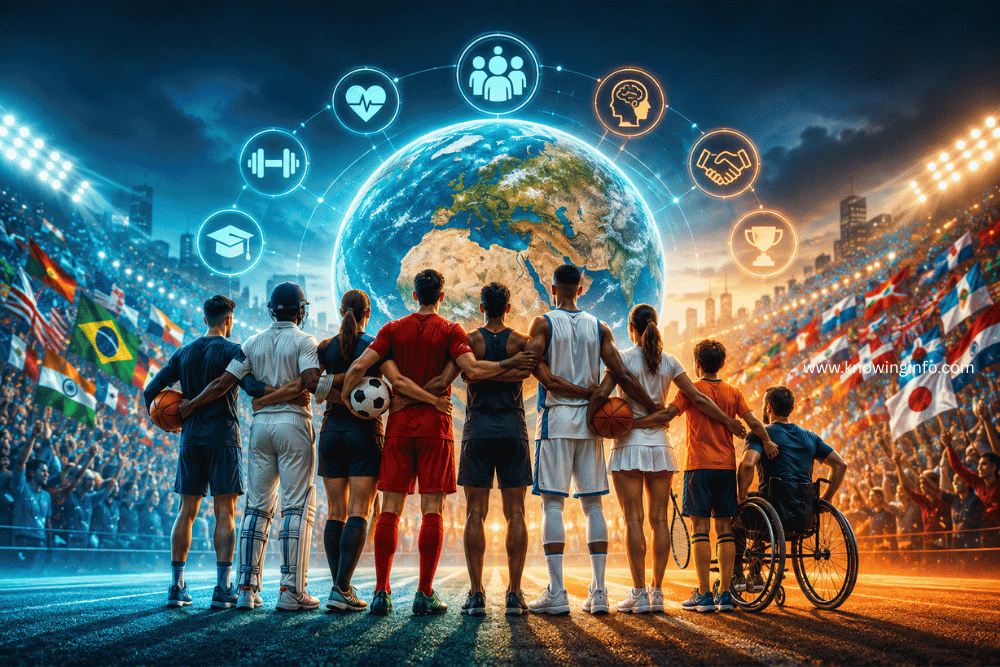
At first, it appears to be a very simple game involving several people playing with a ball or moving about a field. However, looking at it more closely, sports are a universal language that does not even require one word to be said.
Sports have a very special way of uniting people regardless of their race, culture, and politics. Whenever a team from their nation wins a game, people who would normally disagree on everything find themselves embracing each other on the streets.
It may well be that the only place on Earth where every single person is evaluated on an equal basis, solely based on merit and integrity and not wealth, is a sports ground.
3 Primary Ways Sports Promote Our Personal Development.
Why have sports continued from ancient days through to the modern multi-million-dollar arenas? It’s because of three enormous contributions they have to offer human civilization.
- Developing Great Character: Before children can comprehend the world of adulthood, sports provide the skills to survive:
- Resilience: Learning how to lose gracefully, dust oneself off, and try again the next day.
- Discipline: Realizing that one cannot go far based on natural ability alone without the dedication of practice.
- Accountability: Knowing that personal actions determine the fate of the entire team.
2. Building Genuine Connections
In today’s world, many of us suffer from loneliness. This is due to us spending all our time engrossed in our phones and being alone. However, participating in sports makes one build genuine connections through meeting and interacting with people face to face, be it playing in a local park or rooting for a team alongside thousands of others in a stadium.
3. Fighting for Positive Change
Throughout history, sports have played a pivotal role in creating an equal world. From the integration of American society by Jackie Robinson in the sport of baseball to the quest for equal pay in tennis by women, sports have offered a powerful voice to fight for justice.
Why Do Sports Keep Our Mind and Body Healthy?
Besides connecting us, sports do a lot of good for our physical well-being. Our heart becomes stronger through running, jumping, and playing. Sports reduce our stress and produce chemicals in our brains that make us feel good and joyful.
It is an increasingly fast world in which there are plenty of stressed and mentally exhausted people, and sports provide a great solution.
Frequently Asked Questions
- What is the primary purpose of sports in society?
Sports serve to unite people, maintain physical fitness, instill values such as cooperation and self-discipline in youth, and develop the spirit of friendly community.
- How can sports impact our psychological well-being?
Taking part in sporting activities reduces stress, increases positive emotions, improves sleeping habits, and promotes the formation of friendships that prevent us from feeling alienated.
- Why do fans get so emotional about their favorite sports teams?
Supporting a sports team provides a sense of fulfilling our basic need to belong somewhere. Having common moments of victory and defeat unites fans into a sort of family unit.
- Are sports able to assist in creating social equality?
Of course! They are all about abilities and efforts regardless of one’s background. Many athletes during their careers became popular enough to advocate for social equality.
- Is it true that casual sports are less important than professional ones?
Not at all! Pro sports are motivational, but playing casual sports among friends makes you healthier and allows you to make new friends.
Key Takeaways
- Common Language: Games cut across all linguistic barriers to unite people through common experience.
- Life Skills: Through playing games, one learns discipline, patience, cooperation, and how to pick oneself up after falling.
- Community Building: Fan culture and local sports promote friendship in a digitally isolated world.
- Physical and Psychological Well-Being: Sports keep us physically fit and psychologically happy as well.
Conclusion
Overall, when you take a step back and look at sports as a whole, they always mean more than just games. They provide a reflection of what it means to be human in our dedication, our sense of community, and our capacity to overcome struggles.
Whether you are kicking a ball around a dirty soccer field, competing in your weekend rec league, or screaming from the back of the stands at your local stadium, you are participating in one of the greatest traditions of humanity. We may have our differences, but when it comes down to it, we are all on the same side.