Agentic AI vs. Generative AI: The Future of Autonomous AI Agents
Generative AI came into the limelight with its poems, email drafts, and question answers. But when we take a step back and consider the situation, it is clear that todays chatbots are simply sitting on your computer, just waiting to be told what to do.
However, imagine what will happen if the AI becomes capable of taking actions on its own without being prompted. This is the main difference between Agentic AI vs. Generative AI.
Whereas conventional AI simply engages in conversation with you, autonomous AI agents can plan a goal, utilize other applications, correct their errors, and complete practical tasks on their own. In this blog, we will explore the process, the reason why autonomous agents are the next step, and the excitement surrounding this technology.
Agentic AI vs. Generative AI: What Is the Big Difference?
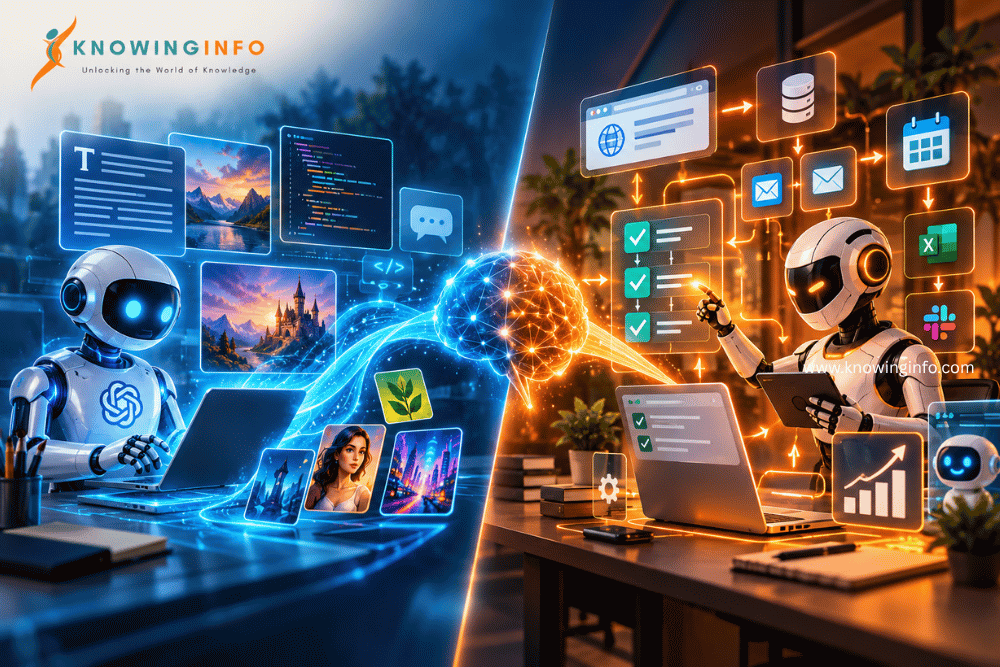
The key difference between Agentic vs Generative AI can be put in just one point: Words vs. Actions.
Generative AI can be thought of as an intelligent writer. You feed it a theme or a problem, and it comes up with text, code, or images using the information it has been trained on. The opposite is true about Agentic AI, which is created with the purpose of taking actions.
This becomes clear through a quick analogy: When you ask Generative AI to come up with some dinner options for you, it gives you the recipe for a delicious dish. However, when the same task is asked of Agentic AI, it not only checks the availability of ingredients but also makes all the arrangements for it.
How Do Autonomous AI Agents Actually Work?
An autonomous AI agent functions by understanding what the goal is, planning, and doing the actions required to achieve the goal. Unlike following instructions at each stage, the agent can decide what to do next from the data that it gets.
- Understanding the Goal: You give the AI agent a clear goal instead of telling it every small step. For example: “Find a good flight under for Friday and book it.”
- Creating a Plan: The agent breaks the main goal into smaller tasks. It decides what needs to be done first, what comes next, and how the final goal can be completed.
- Using Tools: The agent can use tools such as web browsers, databases, or business applications to collect information and perform required actions.
- Checking and Adjusting: After taking an action, the agent checks the result. If something does not work as expected, it can adjust its next step and continue working toward the goal.
Why Agentic AI Represents the Future of Autonomous Systems?
Agentic AI is gaining importance in the development of autonomous systems. Apart from generating a result, it has the capacity to understand the goal, make decisions, utilize various resources, and perform several actions to complete a task.
In other words, an agent does not just create a response but understands a request, checks information related to the customer, processes an action, and sends back a notification. Therefore, businesses get an opportunity to automate entire processes instead of separate activities.
With the improvement in decision-making skills of agents and ability to perform tasks independently, businesses get an opportunity to decrease redundant activities and save time on day-to-day processes. Therefore, agentic AI is considered one of the profitable directions of the development of autonomous systems.
The Real-World Business Value of Autonomous AI Agents
Autonomous AI agents can help companies in managing routine work with little human intervention. The agents can execute actions, analyze data, and perform other operations that will free employees’ time to focus on critical business operations.
- Save Time: AI agents can handle routine operations like form checking, data updating,g and responding to frequently asked customer queries.
- Increase Employee Efficiency: With AI agents taking care of routine activities, employees can save more time to solve problems and make plans.
- Continuous Work: Autonomous AI agents do not require regular pauses between operations and can work throughout the day.
In general, autonomous AI agents reduce routine operations, increase efficiency, and manage everyday operations.
Key Takeaways
- From Words to Actions: Generative AI is designed to write and respond, whereas Agentic AI is created for performing real actions.
- Smart Decision-making: Agents have the ability to plan complicated tasks, use applications, and correct themselves.
- Not Just Chatbots: Technology is no longer limited to talking to chatbots but also handing over tasks to intelligent agents.
- Impactful Outcome: Automation of boring manual tasks makes way for impactful projects.
Conclusion
Agentic AI vs. Generative AI is important to understand what path technology is taking into the future. Generative AI endows machines with thinking and writing abilities. Agentic AI endows machines with the ability to execute tasks.
The integration of autonomous agents in our working lives will improve. We don’t need to spend our whole day switching between ten applications just tell our agents what to do, and they will perform the job for us. The main point about autonomous AI agents lies in their ability to transition from answers to results.
Frequently Asked Questions
1.What Is The Easiest Way To Explain Agentic AI vs. Generative AI?
Generative AI is used to create things like text, images, or responses, whereas Agentic AI does something to accomplish an objective. In simpler terms, Generative AI assists in creation, whereas Agentic AI helps in achieving a particular goal.
2. Will Autonomous AI Agents Replace Human Jobs Completely?
No. The purpose of agents is to perform dull and repetitive tasks on the computer. Humans are still required for making decisions and doing creative work.
3. Can an AI Agent Run Off On Its Own And Cause Problems?
Definitely, an AI agent can present issues if no appropriate restrictions are set on it; hence, businesses adopt safety mechanisms that impose restrictions on the agent’s actions. In case of activities such as payments or emailing necessary information, the agent can be programmed to pursue human permission first.
4. Do I Need To Know Coding To Use Agentic AI?
Not really. With many new agent platforms, you can tell the agent your objectives using regular language, and then the agent will do the necessary technical processing for you behind the scenes.
5. What Tasks Can Autonomous AI Agents Handle?
Autonomous AI agents can take on activities such as analysis of information, workflow management, answering customer queries, updating records, and other routine business activities. Their actual capabilities will depend on the tools, information, and access privileges of the agent.