
How Artificial Intelligence Is Reshaping Business Operations and Redefining Workforce Skills?
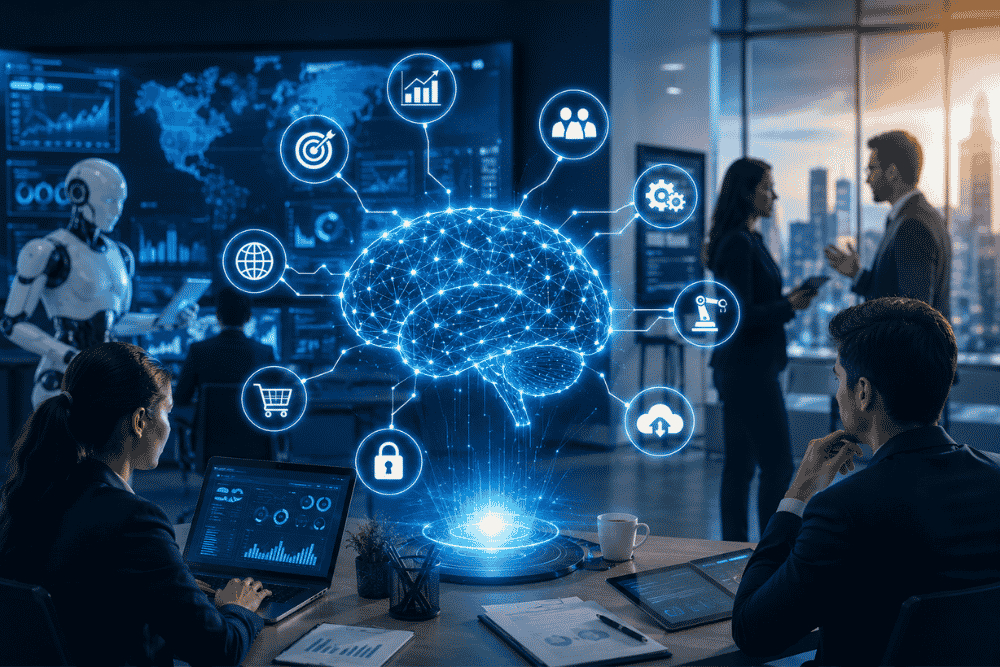
In any office setting you walk into today, you will notice a huge process underway. The traditional method of running a business is rapidly changing, and this is all due to the intelligent automation that is now possible through computer programming. The executives within companies are not just experimenting with the technology anymore; they are combining it right into their systems.
The pace of this shift is incredibly fast, and it is pushing formal office work to develop radically. Understanding how AI is changing business and representing new business operations for workers is truly the key to keeping ahead in professional life now.
Let’s have a closer look at how AI transforms everyday work and how it changes the skill set needed to be successful.
What Is Artificial Intelligence in Business?
In a simple office environment, AI is not only a single piece of software but rather an entire system of intelligent technologies. It can be seen as a digital mind of the enterprise that analyzes extensive amounts of information, detects patterns, and quickly makes decisions.
The Major Pillars of Business AI
To automate daily work, businesses use a few core types of AI tech:
- Machine Learning (ML): Programs that make use of past data and predict future trends without having to be programmed by a human every single time.
- Generative AI (GenAI): Programs that have been trained very well to create text, code, or layout based on typing in prompts.
- Predictive Analytics: Complex data-driven machines that predict what purchases customers would make or potential future threats to the market.
- NLP & Computer Vision: Machines that can scan through legal contracts, recognize human voice, and analyze security camera footage.
How Is AI Reshaping Business Operations?
The use of AI solutions allows businesses to replace slow and manual processes with fast automated workflows.
1. Automated Repetitive Processes
AI performs as a tireless helper, doing such boring tasks as filling out data in a database, processing invoices, scheduling, filing documents, thus saving huge amounts of money for businesses.
2. Customer Support
AI chatbots that work today can instantly provide customers with friendly help, identify whether the customer is disappointed with something, and also give a personalized response to clients.
3. Smart Logistics and Security
AI can predict the amount of stock in warehouses, plan the most efficient way for delivery, and indicate the moment when the goods are going to run out. Meanwhile, AI security systems monitor the network to control hacking and fraud.
Industries Facing Major Changes
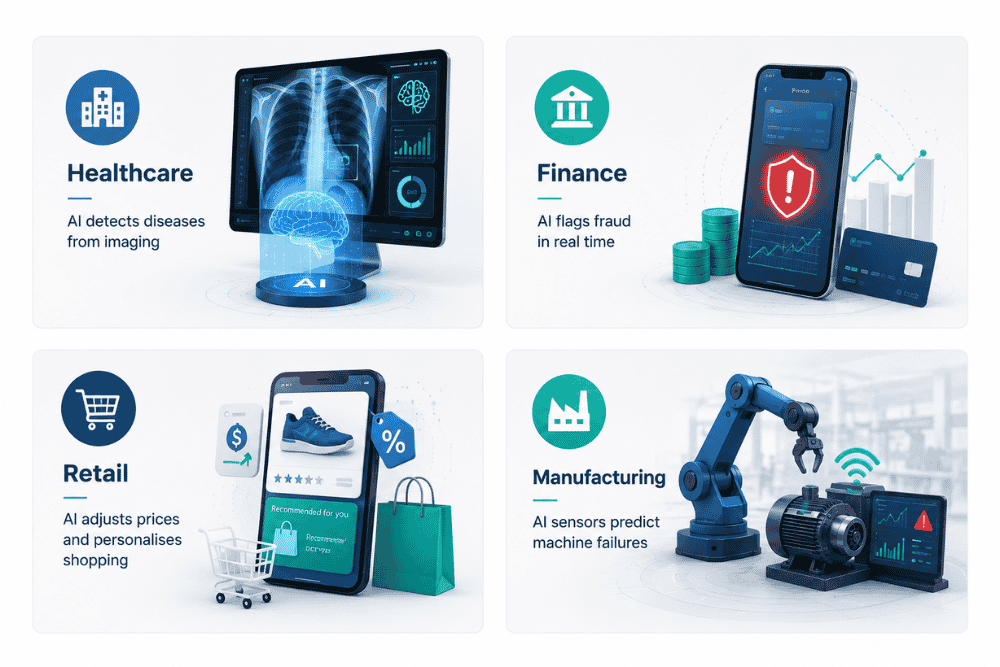
- Healthcare: With the help of AI, doctors can examine patients’ imaging to detect any disease in advance, and software does all the paperwork for them.
- Finance: The algorithms examine the risk involved in lending money and detect any fraudulent activities using credit cards.
- Retail: Artificial Intelligence can adjust prices automatically based on need and make product suggestions.
- Manufacturing: Using the help of sensors, factories anticipate equipment breakdowns.
Redefining Business Roles and Skills
With the beginning of automatic data processing tools, people now move from performing everyday tasks to developing strategies. The current work environment demands a perfect balance of technical skills and strong emotional intelligence.
Jobs Being Created by AI
Many creative jobs are being created by this new economy, including:
- Prompt Engineers: Professionals who know how to communicate with AI programs can achieve the best output.
- AI Operations Managers: Professionals who are responsible for overseeing interactions between humans and AI systems.
- AI Ethics Consultants: Experts who ensure the AI models maintain their ethicality and legality.
Will AI Replace Your Job?
It is commonly feared that machines will ultimately make every single job of mankind. This assumption fails to see that AI does not replace man, but those men who apply AI replace those who do not.
Routine tasks and basic data organization will be done by machines. However, functions that need strategic thinking, leadership skills, and empathy will always remain the domain of man. It’s all about the augmented workforce model, where machines are busy with number crunching and human beings concentrate on their strengths.
Challenges of Using AI in Business
It is not easy to switch to an AI model for some reasons. The leaders will face specific difficulties, which include:
- Privacy of Data: Controlling private information of the business and customers from going into the public domain.
- Bias in Algorithms: Ensuring that AI is programmed on unbiased data.
- Fear of Workers: Overcoming opposition from employees due to fears about the technology.
- Costs of Performance: Considering the initial costs of the program and its future benefits.
Frequently Asked Questions
How does AI change the way businesses operate?
AI simplifies operations by automating tasks, analyzing real-time data, and providing customer support.
Which jobs in the business can be automated?
Data entry, billing reconciliation, lead organization, stock management, and responding to simple emails.
What knowledge do I need to use AI?
Data literacy, a good understanding of AI tools, critical thinking, and communication skills.
Will AI replace me?
Not necessarily. It functions as a helper who will do all everyday activities and allow you to think of something immense.
Which sectors will have the greatest advantages because of AI?
In the healthcare, finance, retail, and manufacturing industries.
How can a small company utilize AI?
Small businesses can use budget-friendly AI tools to create content, run chatbots, and automate email marketing.
Key Takeaways
- Boost to Workflow: Artificial Intelligence helps companies become faster because it takes care of the routine work and provides them with instant analysis of their data.
- Change in Skills: There is a trend of shifting the jobs of people from being more manual towards being more analytical and critical.
- Collaboration between Tools and People: The companies that are doing well combine human skills and tools.
- Learning Process: In order to stay relevant, one must learn how to use all these tools.
Conclusion
The idea of Artificial intelligence isn’t futuristic anymore; it is the basic infrastructure of modern business. You cannot think about automation as an extra software update. Businesses have to make serious investments in training their workers and creating a learning environment for them.
The strength of any business lies in the combination of machine efficiency and human imagination. If you educate your team to use tools wisely, it will be easy to navigate the future and achieve success.
It is amazing how an automated approach can process many hours of data analysis within seconds. If your team has used smart tools for managing projects, then you have probably seen how much freedom this provides.